

Explainers
Six questions nobody answers out loud.
If you have never been on a set, the industry looks like a closed room where everybody already knows the rules. They are not secret. They are just never written down, because the people who know them learned by standing next to somebody.
These six explainers write them down. Each one answers a single question, plainly, from UK practice.
The six
Start wherever your question is.
01
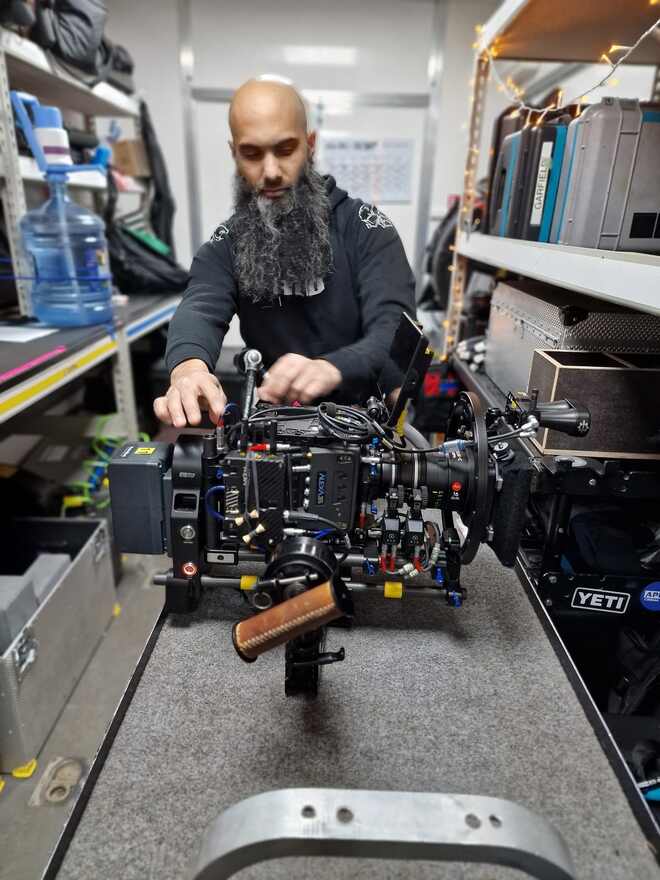
How a set works
Who is who on the floor, what the words mean, and why nobody explains any of it to you.


03
How crews are hired
Why the job you want was never advertised, and what people do instead.

04
How departments fit
Camera, lighting, grip, sound, art, production and post — and who waits for whom.

05
How the money works
Where a budget comes from, where it goes, and what that means for your day rate.

06
How to get in
Every route in, including the ones nobody tells you about, with the degree route in its proper place.
What each one answers
In more detail.
These pages exist and are being brought across into this library. Until each one lands, the destination on its card is the closest thing we already have.
How a set works
What happens between call and wrap, in order. Who calls the shots on the floor, why the 1st AD is louder than the director, what “standby” and “lock it up” are for, where you are allowed to stand, when to speak and when not to. Written for somebody whose first day is next week.
How a film gets made
The whole process from an idea to a delivered master: development, finance, prep, shoot, post, delivery. What each stage is trying to decide, roughly how long it takes, and why prep is the part that determines whether the shoot is calm.
How crews are hired
Why so few jobs are advertised, what a heads-of-department network is, how a recommendation travels, and what a production manager is checking when they ring somebody about you. Includes what to send, what not to send, and when.
How departments fit together
The unit as a machine: which department is waiting on which, why camera and lighting share a problem, what the art department needs a week before you do, and how to work out whose job a thing is without asking three people.
How the money works
Where the budget comes from, what above and below the line means, who employs you, how day rates, overtime, turnaround and holiday pay work, and what a deal memo should say before you turn up. Rates themselves come from the guilds and unions, not from us.
How to get in
The routes: runner, department trainee, a scheme, a course, a transfer from another trade, a relative. What each costs in time and money, which ones suit somebody with no contacts, and what to do in the first six months so there is a second six months.
How to read them
One question at a time.
You do not need all six. Read the one that matches the thing you are about to do — a first day, a first application, a first conversation about money — and come back for the others when they become the next problem.
The library orders the craft by stage. The Careers A–Z tells you what each grade does. These sit underneath both, for the things that are too obvious for anybody to explain.
Next
If an explainer answered the question, the next one is usually what to do about it.
These are free, they open without a sign-up, and they stay that way. Where the answer turns into something you would actually buy — training for yourself, a programme for a group, a crew, a commissioned film, or a test day with a product on it — there is one door for all of it, and it says on the way in where it is sending you.