
Learn · The library
The industry already teaches this. Nobody put it in order.
Department guides, and the stage you are at. Every list is chosen by somebody who has done that job on a UK set, labelled free or paid before you click, and linked out to the person who made it.
The best of what already exists, put in order. Where the free material does not exist the page says so and stops. Where the best teaching is behind a subscription we send you there.
It is free and it stays up, which is what makes it useful between jobs. It is not a route to a qualification and does not pretend to be one.
By department
Department guides, each with a reading order.
Each guide opens with what to learn first and in what order, then the free list, then the short list of what is worth paying for, then the books, then the grades.
Camera
Loading, marking, slating and focus — weighted to the assistant grades, because that is where the work is.
Lighting and electrical
Load, distribution and safety first. The half of lighting that gets you hired.
Grip and rigging
The least documented department in the industry, and the easiest first day to get.
Art, costume, hair and make-up
The departments that build the world, and the making skills they hire on.
Post: editing, sound and grade
Free professional software and a free curriculum behind it. The best free offer in the industry.
Production and assistant directing
Breakdown, schedule, budget and call sheet, and the office where most people enter.
By where you are
Where people are standing when they arrive.
Careers are not linear and nobody is only one of these. Pick the one that describes this month.

01
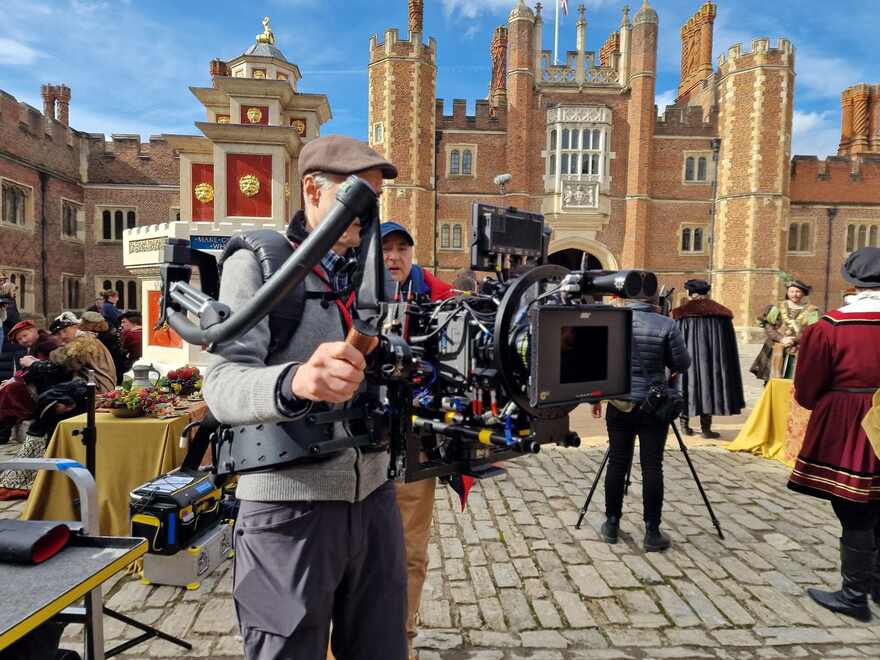
Never been on a set
No kit, no contacts, no idea what the jobs are called. A fortnight’s work, in order, costing nothing.
02
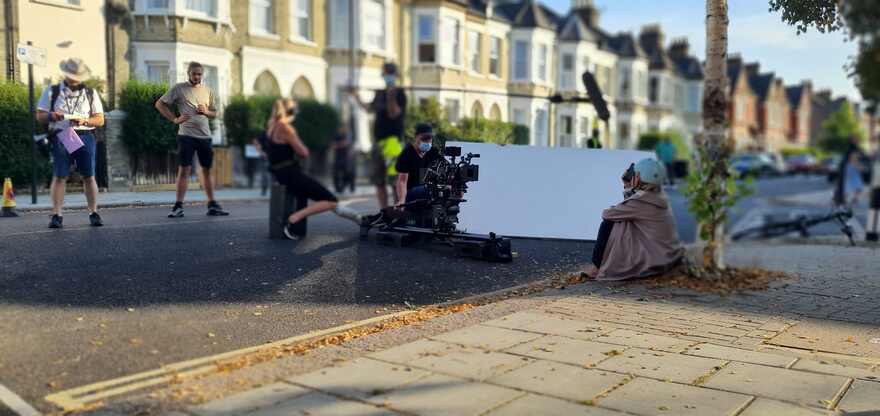
You have a first day
Two hours of preparation so your first day is not spent apologising.
03
Building a career
You have a credit. You cannot get the third one. Rates, tax, and the grade above you.

04
Changing department
Crossing sideways with credits in the wrong craft, and how to write the application.
05
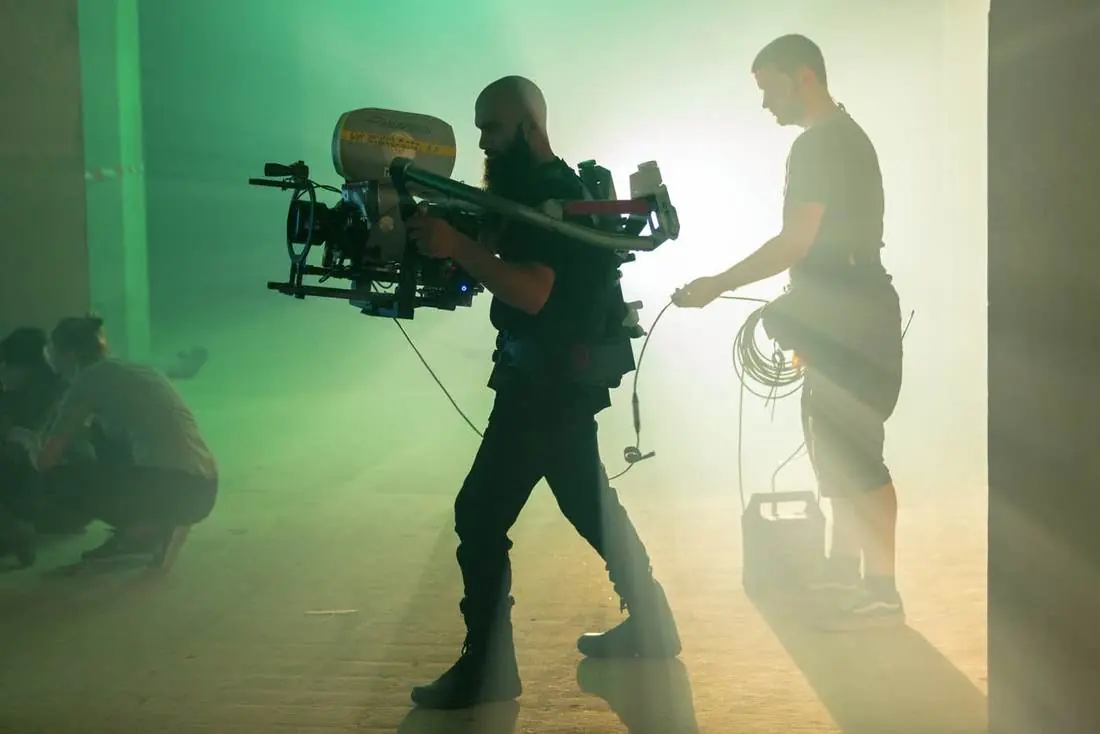
Running a department
Hiring, budgets, published rates, guild grades and the safety you now sign for.
Not sure
You do not know what the jobs are
Every grade on a UK unit, what it does at eight in the morning, and every route in.
The four platforms
Almost everything in this library sits on one of four platforms.
Three of them are free. The fourth is usually free if you have a library card, and few people check.
ScreenSkills (opens in a new tab) · Free · UK terminology · account needed for e-learning, not for profiles · 18+
The UK sector skills body. Job profiles, skills checklists and career maps open without an account; the e-learning modules need a free one. The only free material written to UK grades, which means it matches the call sheet you will be standing under.
British Cinematographer — CineSkills and CinePlayer (opens in a new tab) · Free · no login, no email, no paywall · camera and lighting
Craft videos, panels, masterclasses and film school showcases, completely ungated — including a large free rail of Filmmakers Academy material. The magazine’s own articles name the fixtures, the rig and the gaffer on real UK productions. It carries no glossary, so read it with ours open.
Blackmagic Design free training (opens in a new tab) · Free · books, videos and project files · post, grade, audio and VFX
Professional editing, colour, audio and compositing software given away complete, with a written curriculum and video courses behind it. A publisher would charge forty pounds a volume for these books. It is the best free offer in the industry and it is not close.
LinkedIn Learning (opens in a new tab) · Paid · usually free with a UK library card · software and business skills
Thin on set craft and largely American. Genuinely strong on editing and finishing software, 3D, and the self-employment side — invoicing, negotiation, project management. Check your library service before paying for it.
Filmmakers Academy is a paid American platform. A good deal of its craft material plays free on British Cinematographer’s video platform, without a card, which is worth knowing before you subscribe to anything.
How we treat other people’s work
We link out, we credit, and we never re-host.
This is the whole policy for every list on every page in this library, stated once here rather than repeated on all of them.
Where an owner allows embedding, a film plays through their own player, so the view and the credit are theirs. Everything else is a link out to their front door, in a new tab.
- List item text
- List item text
- List item text
- List item text
The other way round it
Or ordered the way a production happens.
Development, prep, shoot, post, delivery, with the departments underneath each one. That is the order the work arrives in on a real job, and it is the map to open if you are trying to understand the process rather than find a job in it.
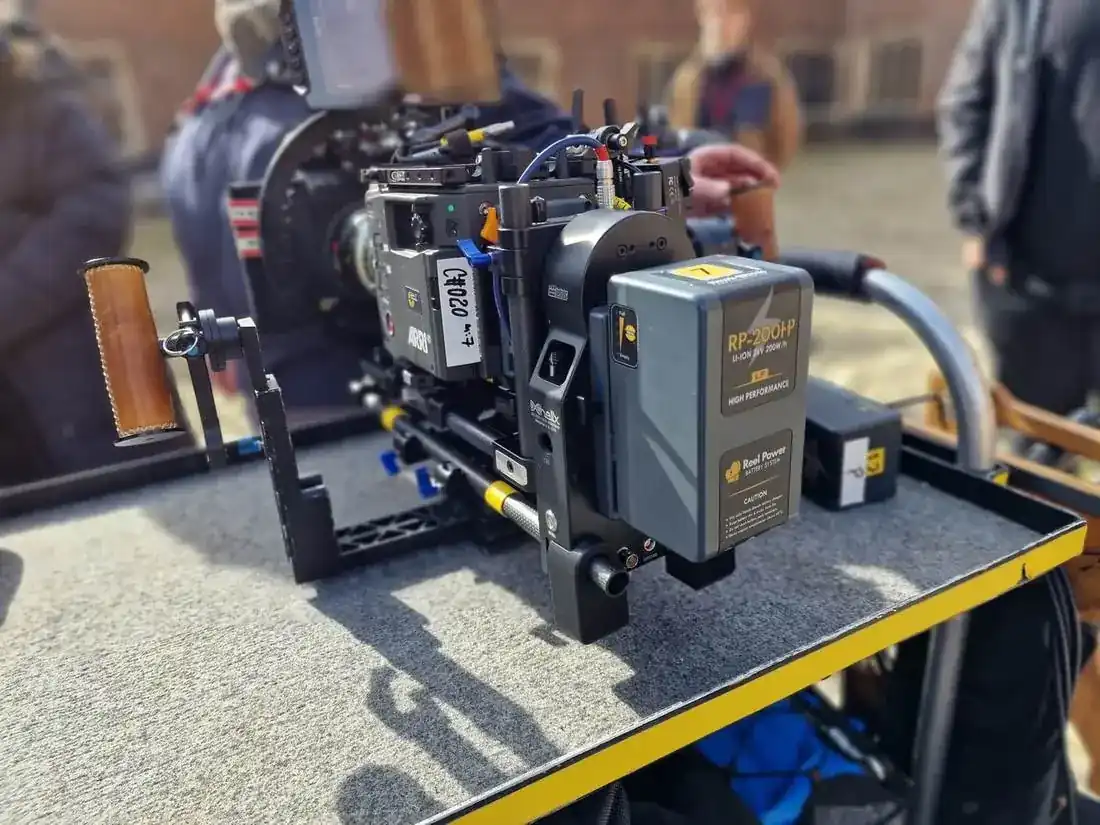
Development
Before anybody books a camera
Script, rights, money, casting and the look. Most people trying to get in skip this stage, then find the decisions on set arbitrary.
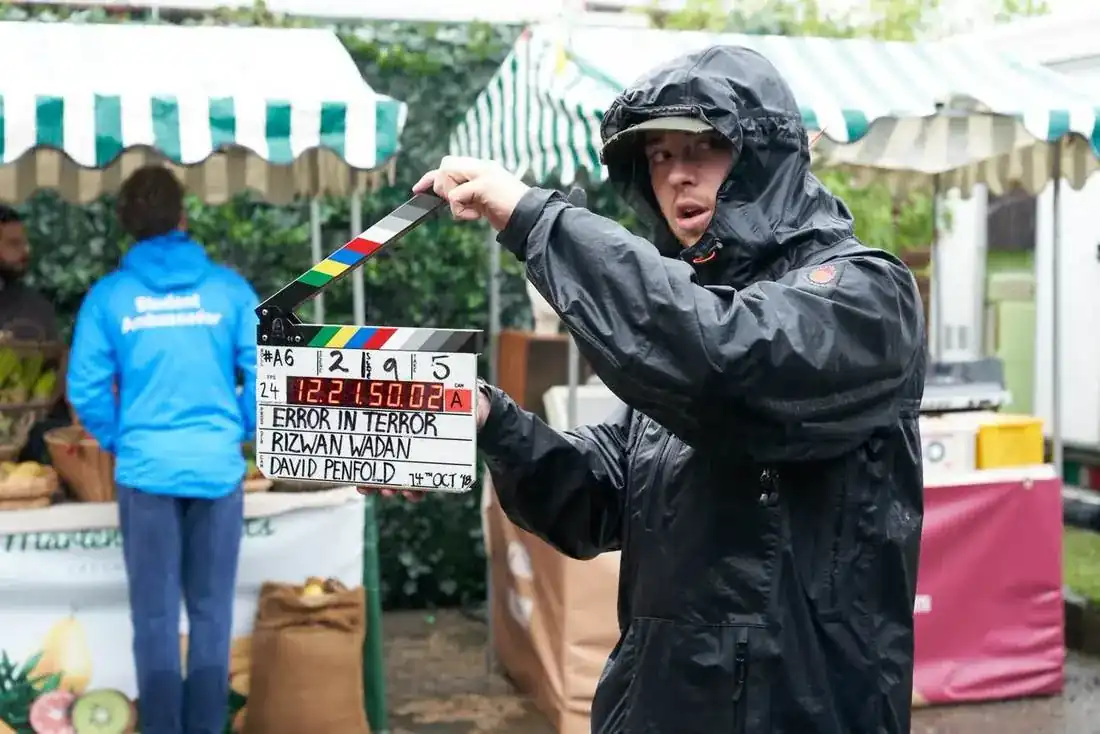
Post
Where the film is actually made
Rushes, cutting room, sound post, VFX and the grade — the stage most people never see from the inside.

Delivery
The stage nobody teaches
Specs, QC, access versions, rights, credits and getting it seen. There is no guide for this yet because the free material barely exists.
Stage 01
Development
Everything that decides what the film is before there is anything to photograph. Most people trying to get in skip this stage entirely, then wonder why the decisions on set feel arbitrary.
Guide
Screenwriting
Where to find produced British scripts, and why reading them beats every course.

Guide
Directing
The half of the job that is not shot design: actors, rehearsal and holding a tone.
Guide
Producing
Breakdown, schedule, budget and call sheet, and the office where most people enter.
Guide
Making films on a phone
No kit, no budget, no contacts. The guide that removes the excuse.
Stage 02
Prep
The stage that decides whether a shoot is calm or expensive. Prep is where most of the craft lives, and it is the least filmed part of the process.

Stage 03
Shoot
One day, every department at once. This is the largest part of the library because it is the part with the most language in it.
Guide
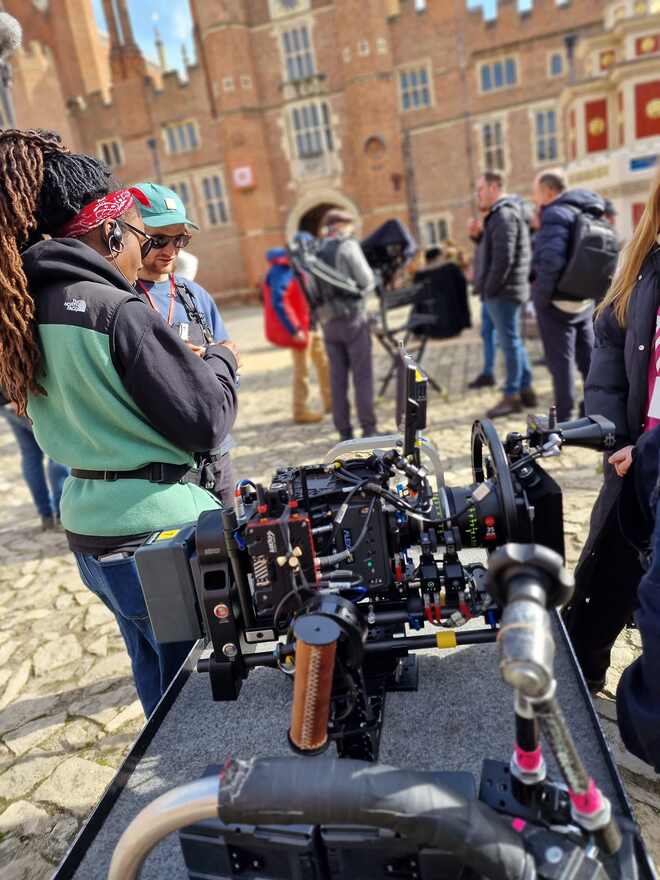
Camera
Loading, marking, slating and focus — weighted to the assistant grades, where the work is.
Guide
Lighting and electrical
Load, distribution and safety first. The half of lighting that gets you hired.


Stage 04
Post
Where the film is made, and the stage most people never see from the inside.

Guide
Editing and post
Free professional software and a free official curriculum. The best offer in the industry.
Guide
VFX and virtual production
Compositing, 3D and the volume, all of it learnable on free tools.

Stage 05
Delivery
The stage that decides whether the work is accepted, seen and still playable in ten years. Almost nobody teaches it.
There is no delivery guide yet. It is the least taught stage in the industry and the free material barely exists, so we are building this one rather than padding it.
The rest of it
What the grades are, what the words mean, and who else can help.
The library points at material. These four point at jobs, language, process and organisations, and they are the part people come back to.
Careers A–Z
Every grade on a UK unit: what you do, what you are good at, tools of the trade, who you work with, and every route in.
Glossary
What people on set are saying and what they mean. UK terminology, UK grades, and it is linked from every guide in this library.
How it all works
Six explainers: how a set works, how a film gets made, how crews are hired, how departments fit, how the money works, how to get in.
The directory
Guilds, unions, funders, training providers, screen agencies and support, with one line on each.