
1 of 10
Film is a decision about method, not a decision about look.
Most arguments about film and digital are arguments about grain. They are the least interesting part. What film actually changes is how a unit behaves, and that is what a production is choosing when it chooses film.
It is also why the choice has to be made early. Film is not a finish you apply at the end.
What it gives you
Three things worth the trouble.
It concentrates the set
When the stock is running, everyone knows. Conversations move to before the take instead of during it. Performers get a crew that is watching them rather than a monitor. This is the argument most directors who have done both will make first, and it has nothing to do with grain.
It records more than you can see on the day
Negative holds detail in highlight and shadow that no monitor on the floor is showing you. That is latitude, and it is why a colourist can find things in a scan that were never visible on set.
It is a finished asset on the day it is shot
A processed negative is a physical original that does not depend on a codec, a drive, or anyone remembering which LUT was applied. It is the only origination format that is also an archive format.
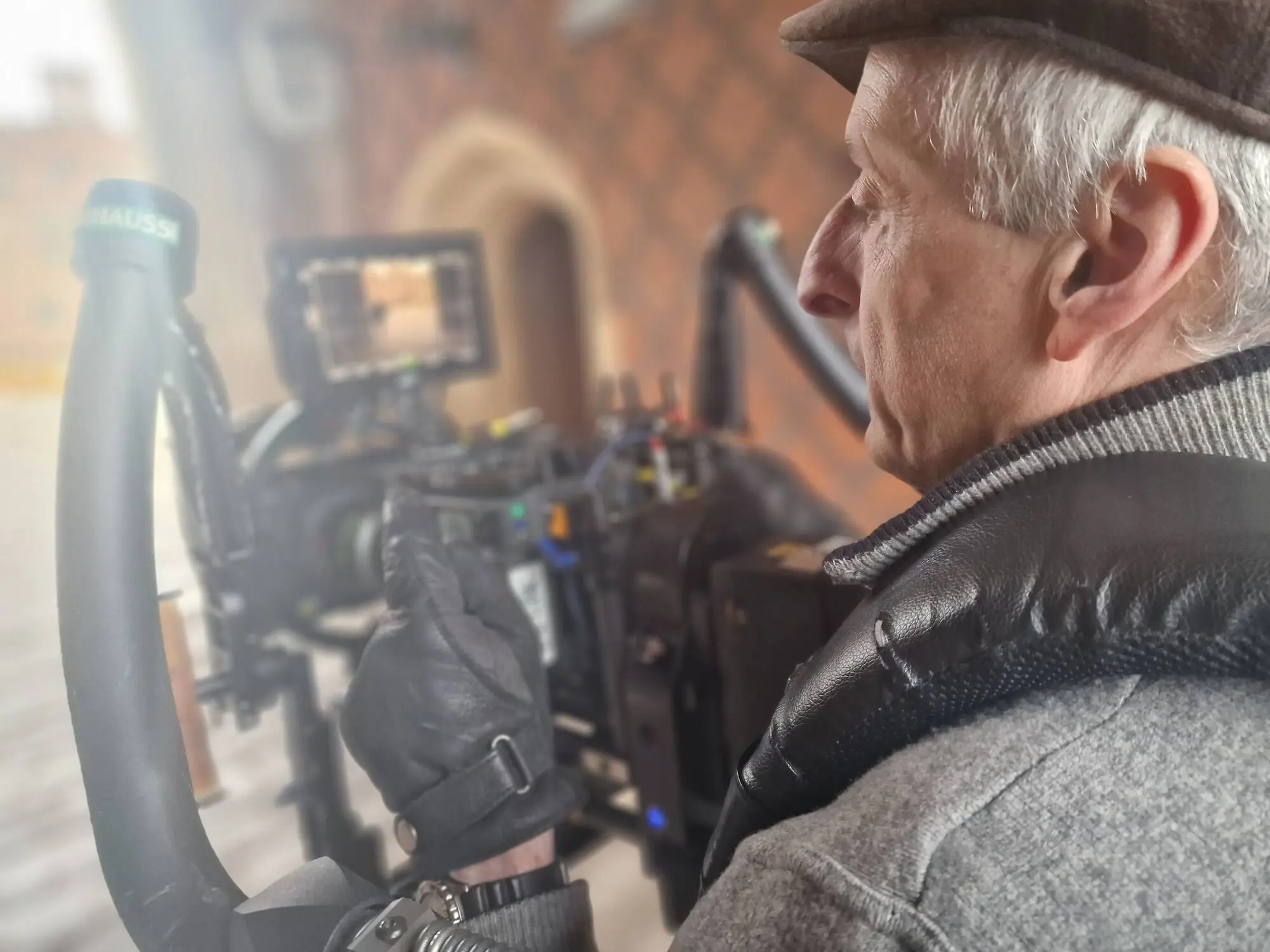
Two operators working the rig together outdoors
What it takes
And the productions where the answer is no.
A schedule with prep in it
Tests, a lab relationship and a rehearsal period are not optional extras. A production that cannot protect prep days should not shoot film.
A crew who have done it
Not the whole crew. But the loader, the focus puller and the DoP have to have done it, and if they have not, that has to be the production’s plan rather than its surprise.
A tolerance for not seeing it today
If the job needs a client sign-off on the monitor, or a turnaround measured in hours, film is the wrong tool and saying so early is the professional answer.
Coverage discipline
High-ratio shooting — long improvisation, unrepeatable documentary, heavy multi-camera — fights the format. Film rewards knowing what the shot is.
Where we sit
We are not romantic about it.
Futures in Film runs both. The test room puts digital systems through a shooting day, and the Shot on Film initiative puts 35mm in the hands of people who have never touched it. The point of teaching film is not to argue against digital. It is that a professional should be able to choose.