

Department guide · Camera
Camera department, from loading the magazine to pulling the focus.
This is the department most people want to be in and the one with the clearest ladder: trainee, clapper loader (2nd AC), focus puller (1st AC), operator, director of photography. Each rung is a specific job with specific responsibilities, and knowing which one you are applying for is most of the battle.
The list below leans towards the assistant grades rather than towards cinematography, because that is where the work is, that is where you get hired, and that is the part the internet covers worst. Cinematography is beautifully documented. Slating is not.
Where to start
Assistants first, aesthetics later.
01
Learn the department before the images
Start with the camera role profiles so you know what a loader, a 2nd AC and a 1st AC each own. Almost every argument a new entrant has on set comes from doing somebody else’s job with the best of intentions.
02
Then slating and marking
The Black and Blue archive is the clearest written material anywhere on holding a slate, calling it, and getting out of the way. It is unglamorous and it is what you will be judged on for two years.
03
Then the pictures
In Depth Cine and Team Deakins are where to go once the mechanics are in place. Both take craft seriously and neither is trying to sell you a camera, which narrows the field considerably.
The list
Free, checked, and every one of these links out.
In Depth Cine (opens in a new tab) · Free · YouTube · trainee upward
Gray Kotze on lensing, exposure, formats and how specific films were shot. It explains the reasoning rather than showing you a result, so what you learn transfers to kit you have never held.
The Black and Blue (opens in a new tab) · Free · written archive · trainees and 2nd ACs
Evan Luzi’s archive on camera assisting: slating, marking, prep, cases, batteries, and the social mechanics of a camera department. Nobody else has written this down properly. Treat the gear references as historical and the craft advice as current.
Team Deakins (opens in a new tab) · Free · podcast · every grade
Roger and James Deakins in long conversation with cinematographers, operators and crew. The only place you will regularly hear senior people describe their mistakes at length, and it takes the assistant grades seriously.
ScreenSkills — camera skills checklists (opens in a new tab) · Free · no account · UK grades
Industry-approved lists of the skills and responsibilities each grade is expected to hold. Print the one for your grade and the one above it. The gap between them is your plan, written in the language a hiring conversation will use.
ScreenSkills — camera job profiles (opens in a new tab) · Free · no account · before you pick a rung
Camera trainee, camera assistant, focus puller, operator, DoP: what the job is, what a day looks like, and how people get in. The nearest thing to an agreed definition of what each grade must know.
British Cinematographer (opens in a new tab) · Free to read online · magazine by subscription · UK
How specific UK productions were shot, including crew structure and kit lists. British, current, and it covers television as well as features, which is where most UK camera work is. It carries no glossary, so read it with ours open.
CinePlayer — Training & Skills (opens in a new tab) · Free · no login, no email · 2nd and 1st ACs
British Cinematographer’s video platform, ungated: BSC Expo panels, film school showcases and a rail of Filmmakers Academy craft videos playing free. A paid American platform’s teaching, published without a card by a UK magazine. Watch this before you consider a subscription.
American Cinematographer (opens in a new tab) · Free articles · paid magazine · working crew
The Shot Craft column covers the mechanics of the job: lenses, filtration, the assistant grades and the physics underneath them. Unusually specific about units and numbers, which most video tutorials carefully avoid. Some pieces sit behind the subscription.
ARRI — Learn & Help (opens in a new tab) · Free · no registration · before a prep day
Camera manuals, workflow guides, colour science white papers and technical downloads, published free. RED and Sony publish the equivalent for their own bodies. Between the three you have covered most of what a rental house will hand you, and on a prep day nobody will explain the menu structure to you.
Blackmagic Design — free training (opens in a new tab) · Free · books and videos · the data side
Media management, offloading, checksums and what a camera report has to say for the edit to survive. Data wrangling is the fastest paid route into a camera department and few people train for it.
Guild of British Camera Technicians (opens in a new tab) · Free to read · paid membership · know it early
The UK body for camera crew, with a crew directory, a trainee scheme and published rate card links. Worth knowing about years before you are eligible to join — ScreenSkills’ own job profiles name it as a route in, which tells you how the industry regards it.
Every link here goes to the owner’s own page, in a new tab. How we treat other people’s work · Last checked September 2026.
Money on it
Worth paying for, once you are already working
ARRI Academy (opens in a new tab) · Paid courses · some free technical content · working technicians
Hands-on certified training on specific camera systems and workflows, ending in a certificate rental houses and productions recognise. Worth it once you are working, because it is what gets you onto a particular package rather than general knowledge.
Filmmakers Academy (opens in a new tab) · Paid membership · some free and trial content · American terminology
Shane Hurlbut ASC’s platform, strong on camera and lighting craft. Learn the UK grade names from our glossary first, then take the technique. Watch the free Filmmakers Academy rail on CinePlayer before you pay for anything.
Tiffen — Steadicam training (opens in a new tab) · Paid, and not cheap · operators
The manufacturer runs the recognised route into stabilised systems. There is no free equivalent and there never has been: the kit is the course.
Your local library card (opens in a new tab) · Usually free · everyone · check this first
Many UK library services give members free access to LinkedIn Learning and other paid platforms. Not a joke, and the first thing to check before subscribing to anything.
The books
Three the department actually owns.
| Book | What it is for |
|---|---|
| The Camera Assistant’s Manual — David E. Elkins SOC | The standard reference for the assistant grades. A second-hand copy costs less than a day’s travel to a unit, and it is the book people in the department own. |
| Cinematography: Theory and Practice — Blain Brown | Exposure, optics, colour and workflow. Covers the physics that video tutorials skip, and it is the bridge from assisting to lighting the frame. |
| The Five C’s of Cinematography — Joseph V. Mascelli | Camera angles, continuity, cutting, close-ups, composition. Old, still correct, and about decisions rather than equipment. |
Where you are
The same list, sorted by what you have already done.
| If this is you | Do this, in this department |
|---|---|
| Never been on a set | The ScreenSkills camera job profiles, then the first hour of The Black and Blue. Buy nothing. |
| You have a first day | The Black and Blue on slating and set conduct. Learn where to stand. Nobody expects you to know a lens. |
| Building a career | The skills checklist for your grade and the one above it, and the ARRI manuals for the bodies on your next job. |
| Changing department | Start at the reading order above, not at the paid list. You are a beginner here whatever your credits say. |
| Running a department | British Cinematographer and the BSC’s published material, and the Bectu cards you are hiring inside. |
The grades
What each rung actually does.
Camera trainee
The entry grade. What you carry, what you are watching for, and how the second day gets asked for.
Clapper loader (2nd AC)
Slate, marks, reports, batteries and stock. The job you will be judged on for two years.
Focus puller (1st AC)
The hardest purely technical job on the floor, and the one with the least margin.
Any word on this page you have not met before is in the glossary, in UK terms.
Where the gap gets filled
On a package, with a first who will correct you.
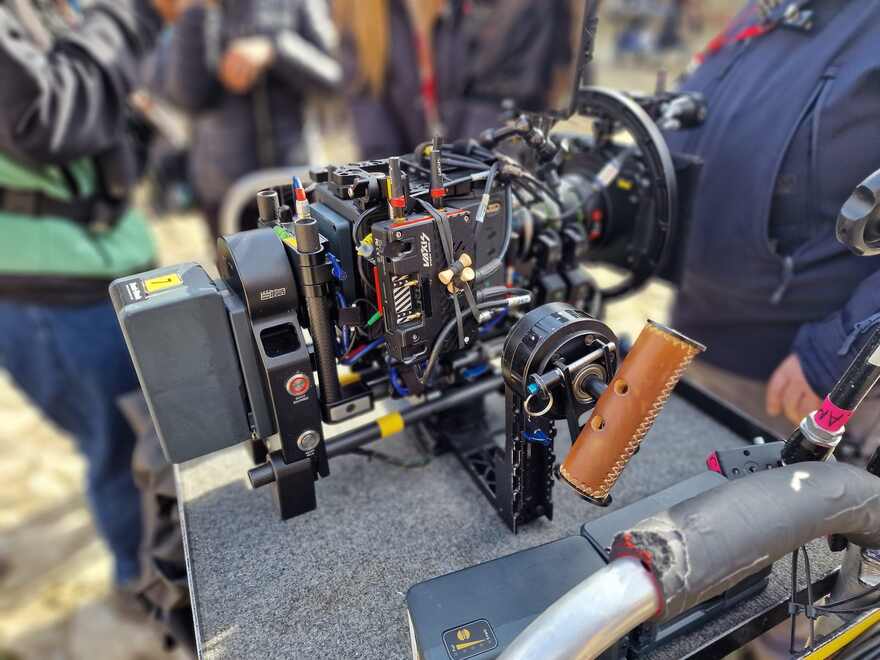
The camera course runs on real cinema packages rather than on a projector, and the production simulations put that package on a working unit with a call sheet and a schedule that does not wait for you. Real kit, real pressure, somebody senior who stops you: that combination is what video structurally cannot provide.
If you are not ready for that yet, the free list above is a good year of self-teaching.
Rupert Hornstein ACO — interview
To be embedded once uploaded.