

Schools and colleges · The careers talk
This is the careers talk we give, written out in full so you can give it without us.
A large production carries roughly two hundred job titles. Most adults, including most teachers, can name five: director, actor, producer, camera operator and possibly writer. Everything else is invisible from outside, and that invisibility is itself the barrier. You cannot want a job you have never heard of.
So 168 of them are on this page: the titles, the alias each job is called by on the day, what it does, roughly what it pays and how people get in. Take it, reorder it, put it on your own slides. There is no licence to read and no attribution required.
The pay bands
Bands, so that one number never has to stand in for a whole career.
Every role below carries a band rather than a single figure, because a day rate depends on the budget, the agreement, the region and the person. The bands come from published union rate cards and are indicative day rates before tax, on a scripted drama or feature, and reviewed annually.
| Band | What it means |
|---|---|
| A | Trainee and entry grades |
| B | Assisting and skilled trade grades |
| C | Fully skilled craft grades |
| D | Senior and supervising grades |
| E | Head of department, negotiated per production |
A day is ten hours before overtime, and a working week on a feature is commonly fifty to sixty hours. The rate-by-rate detail, with the card and the year each figure came from, is on the pay page, and the picture of freelance income — the gaps between jobs, the tax, and why a good day rate is not the same as a good year — is on it as well.
Low budget, unscripted television, commercials and short-form all pay differently, sometimes substantially less. Say that to a class rather than letting them read one number as a promise.
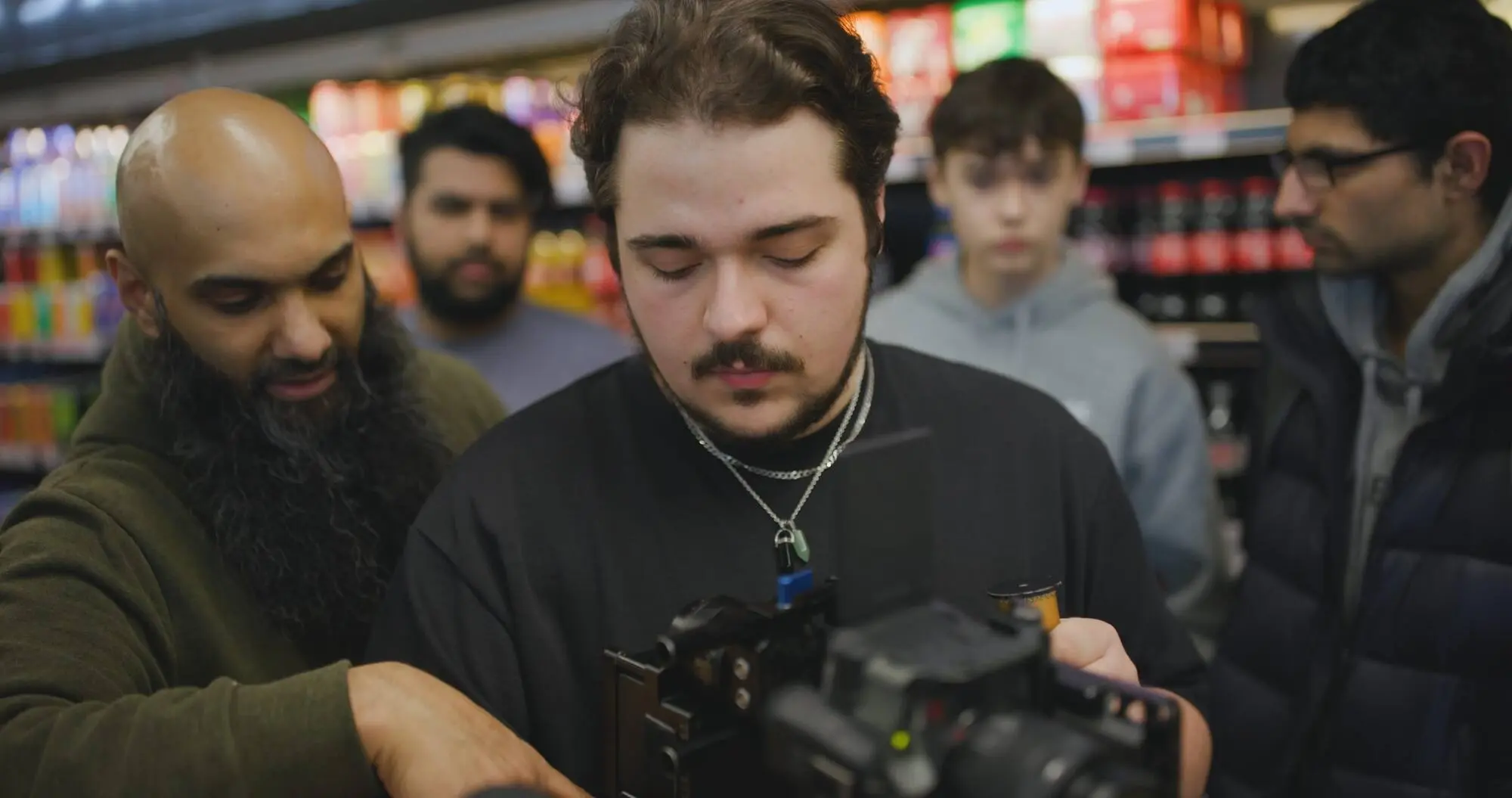
CameraCamera department: applied optics, carried out at speed.
| Job title, and what it is called on the day | What the job is | Band | Usual route in |
|---|---|---|---|
| Camera trainee | Fetches, carries, learns, and keeps the department’s paperwork and batteries straight | A | School leaver or trainee scheme; no degree needed |
| Clapper loader (2nd AC) | Slates every take, loads media or film, marks actors, keeps the camera sheets | B | Up from trainee, typically two to three years |
| Focus puller (1st AC) | Holds focus on a moving actor with a moving camera, by measurement and feel | C | Up from loader; the hardest promotion in the department |
| Camera operator | Frames and moves the shot the DoP has designed | C – D | Up from focus puller, or across from second unit |
| Steadicam operator | Carries a stabilised camera on a body-mounted rig, often for the whole day | D | Operator who has invested in the rig and the training |
| Director of photography (DoP) | Designs the light and the lens for every shot, and runs camera, grip and lighting | E | Fifteen years or more; shorts and low budget first |
| Digital imaging technician, or DIT | Manages exposure, colour pipeline and image data on set; the most explicitly technical job on a unit | C | Physics, computing or photographic science; often direct entry |
| Data wrangler, also called data loader | Copies rushes off cards with verified checksums so nothing is ever lost | B | Direct entry with IT and data skills; a common first paid job |
| Video assist operator, also called playback operator | Runs the monitors and the recorded playback the director and script department watch | B – C | Direct entry or across from camera |
| Central loader | On a multi-camera unit, the one person handling every camera’s media | B | Experienced loader on a large production |
| Second unit director of photography | Lights and shoots the material the main unit does not have days for | D | Operator or DoP with an established main-unit relationship |
| Drone pilot, also called UAV operator or aerial camera operator | Flies the aircraft carrying the camera, under a civil aviation permission | C – D | Aviation qualification plus camera experience; a genuine second career route |
| Underwater camera operator | Shoots in tanks and open water, with the diving qualification the insurer requires | D | Commercial diving qualification plus operating experience |
| Motion control operator | Programmes a robot arm to repeat a camera move to the millimetre | C | Robotics, engineering or previs; a small and well-paid speciality |
| Remote head technician | Runs the gyro-stabilised head on a crane, a car or a wire rig | C – D | Camera or grip background plus electronics |
| Techno crane operator | Drives a telescoping crane arm carrying the camera | C – D | Grip route, then crane training |
| Camera prep technician | Builds, tests and services camera packages at a rental house | B | Direct entry at a rental house; the best technical grounding there is |
| Lens technician | Collimates, services and tests lenses to optical tolerance | B – C | Optics or precision engineering, at a rental house |
| Unit stills photographer | Shoots the frames that become the poster and the press pack | C | Stills career first, then a way onto a unit |
The most competitive department to enter and the one that most rewards a physics student. Focus pulling is distance estimation and depth of field calculation, performed in a second, in the dark, with a moving subject.
Lighting and electricalLighting and electrical: electrical engineering, on a deadline.
| Job title, and what it is called on the day | What the job is | Band | Usual route in |
|---|---|---|---|
| Lighting trainee, also called a trainee electrician | Carries, coils, learns the kit and the safe way to move it | A | School leaver, trainee scheme, or across from an electrical apprenticeship |
| Electrician, always called a spark | Rigs and runs the lights, and is responsible for the power reaching them safely | B | Electrical qualification, or a lighting trainee scheme |
| Generator operator, also called the genny op | Runs the mobile power station the unit depends on, and its distribution | B | Spark with generator and distribution training |
| Rigging electrician | Installs the lighting before the shooting crew arrives and strips it afterwards | B | Spark route; a large part of studio work |
| Best boy, the gaffer’s second | Runs the crew, the order, the truck and the paperwork for the gaffer | B – C | Experienced spark |
| Gaffer, formally the chief lighting technician | Turns the DoP’s intention into a rig, a load and a crew | D – E | Ten years or more through the department |
| Rigging gaffer | Plans and leads the pre-rig on a stage or a location, often weeks ahead | D | Experienced gaffer or best boy |
| Desk operator, also called the board op or console programmer | Programmes and cues hundreds of fixtures from a lighting console | C | Theatre or live events lighting; a direct crossover route |
| Practical electrician | Wires and dims the lamps that appear inside the shot as part of the set | B – C | Spark with a fine finishing hand |
| Studio lighting technician | Rigs and maintains the permanent lighting infrastructure of a stage | B | Direct entry at a studio; steady work, unusually for this industry |
| Balloon light operator | Runs helium and mains balloon lights, which are gas handling as much as lighting | B | Spark with the gas handling ticket |
An electrical qualification is worth more here than a media degree. The department calculates load, designs distribution, and is legally responsible for the power feeding a building full of people.
Grip and riggingGrip and rigging: load calculation and structural work, under time pressure.
| Job title, and what it is called on the day | What the job is | Band | Usual route in |
|---|---|---|---|
| Grip trainee | Learns the track, the plates, the safe lift and the order things come off the truck | A | School leaver or trainee scheme; a trade background helps a great deal |
| Grip | Builds and moves everything the camera sits on, and is responsible for its stability | B – C | Trainee route, or across from scaffolding, engineering or rigging |
| Dolly grip | Moves the camera on a dolly, matching an actor’s pace to the frame | C | Experienced grip; a performance job as much as a technical one |
| Best boy grip | Runs the crew, the kit list and the truck for the key grip | C | Experienced grip |
| Key grip | Heads the department, signs off every rig and every load | D | Ten years or more; carries real legal responsibility |
| Crane technician | Assembles, ballasts and operates cranes to a calculated load | C | Grip route with crane and rigging tickets |
| Rigging grip | Builds the scaffold, the wire and the suspension the camera and lights hang from | B – C | Scaffolding or rigging trade; a direct route in with no film background |
| Camera car driver, also called a low loader or arm car operator | Drives the vehicle carrying camera, crew and a stabilised arm at speed | C | HGV licence plus precision driving qualification |
| Standby rigger | Alters and makes safe the rig while the unit is shooting | B | Rigging trade route |
The least documented department in the industry, and the one with the most direct route in from a trade. If a student is doing engineering or construction and likes solving physical problems, this is the answer.
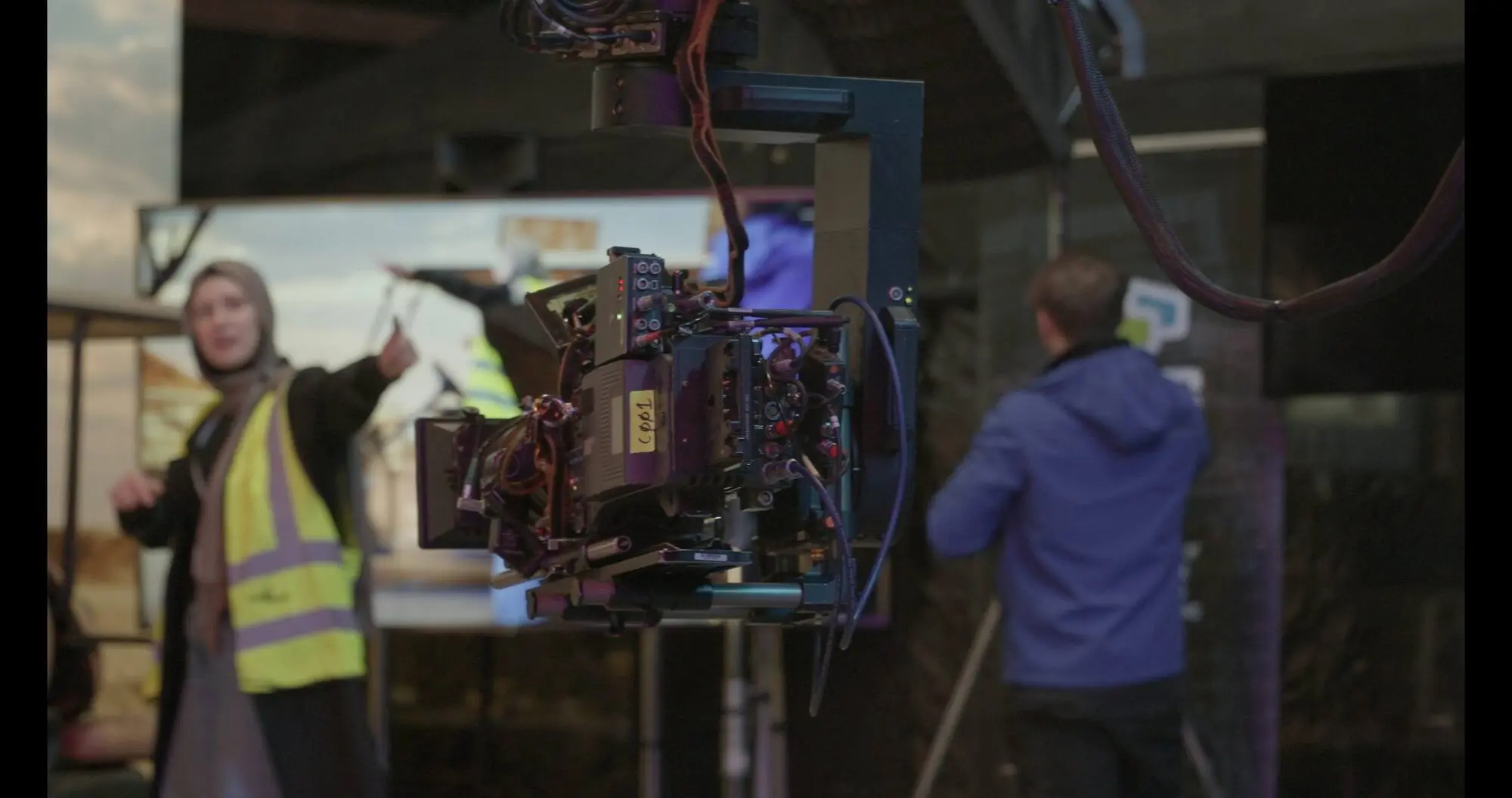
SoundSound, on the day and afterwards: acoustics, radio frequency and performance.
| Job title, and what it is called on the day | What the job is | Band | Usual route in |
|---|---|---|---|
| Sound trainee, also called the third assistant sound | Cables, batteries, carts and learning to stay out of the shot | A | Trainee scheme or direct entry; music tech and physics are useful |
| Boom operator | Holds a microphone out of frame for hours, and knows the dialogue better than the actors | C | Up from trainee; a physically demanding craft |
| Sound assistant, also called the second assistant sound | Fits and manages the radio microphones on performers | A – B | Up from trainee |
| Production sound mixer, also called the sound recordist | Records every word on the day, and is the only person who can say it was not clean | D – E | Ten years or more; usually owns the kit, which is a business as well as a craft |
| Radio microphone technician | Manages frequency coordination across dozens of transmitters in one building | B | Radio frequency and electronics knowledge; increasingly its own job |
| Playback operator, in music and dance work | Runs the pre-recorded track the performance is shot to, in exact sync | B – C | Music technology background |
| Dialogue editor | Cleans, matches and assembles every recorded line in the finished cut | C | Post route, usually from assistant |
| Sound effects editor | Builds every sound that is not dialogue or music | C | Post route or games audio |
| Foley artist | Performs footsteps, cloth and handling sound to picture, physically, in a studio | C | Apprenticeship to an established artist; a tiny and remarkable profession |
| Foley mixer, also called the foley recordist | Records and balances what the foley artist performs | C | Studio assistant route |
| ADR mixer | Records replacement dialogue with the actor, months after the shoot | C | Studio assistant route |
| Re-recording mixer, also called the dubbing mixer | Balances dialogue, effects and music into the final mix in a theatre | D – E | Fifteen years; the top of the post sound ladder |
| Supervising sound editor | Runs the whole post sound department and its schedule | D | Senior editor |
| Sound designer | Invents the sounds that do not exist to be recorded | D | Effects editing plus a synthesis and recording practice |
Production sound is acoustics and radio frequency coordination under pressure. Post sound is a separate career with its own ladder, and the two rarely swap.
Art, construction and propsArt department and construction: design, technical drawing and the trades.
| Job title, and what it is called on the day | What the job is | Band | Usual route in |
|---|---|---|---|
| Art department assistant | Drawings, samples, deliveries, and the model of how the department runs | A | Direct entry; art, DT or architecture backgrounds are common |
| Draughtsperson | Draws every set for construction, to millimetre tolerance, in CAD | C | Architecture, engineering or technical drawing; a strong direct-entry route |
| Junior draughtsperson | Detail drawings and revisions under a senior draughtsperson | B | CAD skills; often straight from a technical course |
| Concept artist | Draws or paints what the film should look like before anything is built | C | Illustration or design; portfolio led |
| Set designer | Turns the production designer’s idea into a buildable set | C – D | Up from draughtsperson |
| Art director | Runs the drawing office and the build schedule for a section of the film | C – D | Up from set designer |
| Supervising art director | Runs every art director and the whole build programme | D | Senior art director |
| Production designer | Designs the entire visual world and leads art, construction and props | E | Twenty years; the department’s head |
| Set decorator | Chooses and places everything inside the set that is not built into it | D | Buyer or dressing route |
| Buyer | Sources, negotiates and returns everything the set decorator specifies | C | Retail, antiques or research background; a good direct entry |
| Dressing prop, also called a prop hand | Places and moves the dressing, safely and repeatably | B | Direct entry; a practical, physical job |
| Standby art director | The art department’s representative on the shooting floor | C | Up from art director on smaller work |
| Standby props | Looks after everything the actors touch, and resets it exactly, take after take | B – C | Direct entry; continuity discipline is the whole skill |
| Property master | Runs the entire property department and its budget | D | Ten years through props |
| Prop maker | Makes objects that do not exist, in wood, metal, resin and print | C | Fabrication, model making, or a 3D printing and CAD route |
| Graphic designer for the art department | Every sign, label, newspaper and screen graphic in shot | C | Graphic design plus period research |
| Construction manager | Runs the build: workshops, trades, budget and programme | D | Construction management; a direct route from outside film |
| Film carpenter, always called a chippy | Builds the sets, to a standard and a speed that surprises people | B – C | Carpentry trade; direct entry with the ticket |
| Stagehand | Moves, wraps and strikes sets on a stage | B | Direct entry |
| Scenic artist | Paints a flat surface until a camera reads it as marble, brick or distance | B – C | Fine art or decorating trade plus scenic training |
| Plasterer and sculptor | Casts and forms mouldings, rock, statuary and architectural detail | B – C | Plastering trade or sculpture |
| Metalworker and welder | Fabricates structure, mechanisms and anything that must not fail | B – C | Welding and fabrication ticket |
| Head of department painter | Runs the paint shop, the finish and the crew | D | Senior scenic route |
| Greensman | Sources, installs and keeps alive every plant and tree in shot | C | Horticulture plus set experience |
| Armourer | Holds, maintains and issues weapons under a firearms certificate, and is legally accountable | C | Firearms licensing and a formal armoury route |
| Action vehicle coordinator | Supplies, prepares and runs every vehicle that performs on camera | C – D | Motor trade plus film experience |
The largest department on a big production, and the one that employs the widest range of skills. A carpentry, plastering, welding or CAD qualification is a direct route in, with no film experience required at all.
Special effects, prosthetics and stuntsSpecial effects: mechanical engineering with a safety case attached.
| Job title, and what it is called on the day | What the job is | Band | Usual route in |
|---|---|---|---|
| Special effects trainee | Learns rigging, pneumatics, water and the safety culture | A | Trainee route; engineering and DT backgrounds are ideal |
| Special effects technician | Builds and runs rain, wind, fire, snow, breakaways and mechanical rigs | C | Engineering, fabrication or pyrotechnics; a strongly technical department |
| Senior special effects technician | Leads a rig on the floor and signs it off as safe | C | Five to ten years in the department |
| Special effects supervisor | Designs the physical effects for the film and carries the legal responsibility | D – E | Fifteen years plus licensing |
| Pyrotechnician | Designs and fires explosive effects under licence | C | Explosives licensing and formal training; not a self-taught job |
| Animatronics engineer | Designs and builds creatures and mechanisms that perform to camera | C – D | Mechanical or mechatronic engineering; one of the clearest STEM routes in |
| Prosthetics technician | Sculpts, moulds and casts appliances in silicone and foam | B – C | Prosthetics course or workshop apprenticeship |
| Prosthetics designer | Designs the character’s physical transformation and runs the workshop | D | Senior technician |
| Stunt performer | Performs the action, having rehearsed it until it is repeatable and survivable | C | National register route with assessed sporting disciplines |
| Stunt coordinator | Designs the action and is accountable for everybody who performs it | D – E | Registered performer with years of logged work |
| Wire rigger | Rigs and flies performers on wires, to a calculated load | C | Rigging trade plus stunt department experience |
Physical effects, animatronics and pyrotechnics are engineering disciplines with statutory licensing. This is where a design technology student who likes mechanisms should be pointed.
Camera set up on a street corner
Costume, hair and make-upCostume, hair and make-up: pattern cutting, chemistry and continuity.
| Job title, and what it is called on the day | What the job is | Band | Usual route in |
|---|---|---|---|
| Costume trainee | Runs, fetches, learns the truck, the paperwork and the continuity | A | Direct entry; textiles and DT backgrounds fit well |
| Costume assistant | Prepares, packs and maintains costume for a group of performers | B | Up from trainee |
| Costume standby | On the floor all day, keeping every costume matching between takes | B – C | Assistant route; continuity discipline is the job |
| Costume supervisor | Runs the department’s budget, crew, sourcing and schedule | C – D | Senior assistant |
| Costume designer | Designs what every character wears and why | E | Fifteen years or a design route with credits |
| Cutter and maker | Patterns and makes garments to fit a specific performer | C | Tailoring or pattern cutting qualification; a real craft shortage |
| Dyer and breakdown artist | Ages, distresses and dyes costume so it reads as lived in | C | Textiles plus chemistry; a scientific speciality |
| Make-up trainee | Sets up, cleans, sterilises and learns continuity | A | Make-up qualification or trainee route |
| Make-up artist | Designs and maintains the face and hair of a performer through a shoot | C | Qualification plus assisting |
| Hair and make-up designer | Leads the design and the department across the whole production | D – E | Fifteen years |
| Hair stylist and barber | Cuts, dresses and maintains hair to period and continuity | C | Hairdressing qualification plus film experience |
| Wig maker | Knots and dresses wigs by hand, one hair at a time | C | Specialist wig making training |
| Prosthetic make-up artist | Applies, blends and maintains appliances on a performer | C | Prosthetics training plus make-up |
Textiles, chemistry and an unforgiving continuity discipline. Cutters, makers and dyers are in genuine short supply, which is unusual enough in this industry to be worth telling a student.
Production, assistant directing and the officeProduction and assistant directing: logistics, money and people, at scale.
| Job title, and what it is called on the day | What the job is | Band | Usual route in |
|---|---|---|---|
| Production runner | Drives, collects, delivers, and sees how the whole machine fits together | A | The classic way in; no qualification required |
| Floor runner | The runner attached to the shooting floor and the assistant directors | A | Direct entry |
| Production assistant | Supports the office: paperwork, distribution, logistics | A – B | Up from runner |
| Production secretary | Runs the office diary, the crew list and the flow of paperwork | B | Up from assistant; strong administrators do well quickly |
| Assistant production coordinator | Travel, crew movement, kit movement and the daily chase | B | Up from secretary |
| Production coordinator | Runs the office, and effectively runs the logistics of the film | C | Three to five years in the office |
| Travel and accommodation coordinator | Moves a hundred people and their families around the country | B – C | Travel industry background transfers directly |
| Production manager | Runs the schedule, the crew and the day-to-day money | D | Senior coordinator |
| Line producer | Owns the budget and the schedule from the inside | E | Ten to fifteen years |
| Production accountant | Runs the film’s books, the tax relief claim and the cost report | D – E | Accountancy qualification; a direct route in for finance people |
| Assistant production accountant | Purchase orders, petty cash, timesheets and the weekly cost | B – C | Finance background; an underrated way in |
| Payroll accountant | Pays several hundred freelancers correctly, weekly | C | Payroll background |
| Third assistant director, the 3rd AD | Runs the background action and gets people to the right place at the right minute | B | The main entry grade into the AD department |
| Second assistant director, the 2nd AD | Writes the call sheet, and runs the cast from unit base to set | C | Two to four years as a 3rd AD |
| Crowd second assistant director | Runs supporting artists, sometimes several hundred in a day | C | Experienced 2nd AD |
| First assistant director, the 1st AD | Runs the floor, the schedule and the safety of the shooting day | E | Ten years or more; the most demanding job on a unit |
| Script supervisor, also called continuity | Holds the entire film in their head so it cuts together | C – D | Specialist training; a small, hard, well-respected profession |
| Location scout | Finds the places the film needs and photographs them properly | B – C | Direct entry; local knowledge and photography |
| Location manager | Secures, licenses and manages every location and its neighbours | D | Up from assistant and scout |
| Location assistant | Runs the location on the day: parking, access, residents, rubbish | B | Direct entry; a common first job |
| Unit manager | Runs unit base: trucks, power, welfare, catering and parking | C | Location or facilities route |
| Casting director | Finds and proposes every performer, and negotiates them in | D – E | Assistant route inside a casting office |
| Casting assistant and associate | Sessions, tapes, submissions and the database | B – C | Direct entry into a casting office |
| Post-production supervisor | Runs the film’s journey from wrap to delivery | D | Post coordinator route |
| Post-production coordinator | Bookings, deliverables, versions and the chase | C | Direct entry with strong organisation |
| Health and safety advisor | Writes and polices the risk assessments the day runs on | C – D | NEBOSH qualification plus production experience |
| Unit medic | The nurse or paramedic on set, all day, every day | C | Clinical registration plus remote or event medicine |
| Transport captain | Runs every driver and vehicle on the production | C | Transport management |
| Unit driver | Moves crew, cast and kit, legally and on time | B | Licence and the right temperament |
| Unit publicist | Manages press access, stills approval and the story about the film | C | Public relations background |
If a student is the one who organises everybody else, this is their department. It is also the one an accountant, a travel agent, an administrator or a licensed driver can walk into as a mid-career change.
Post-production, visual effects and virtual productionPost, visual effects and virtual production: software engineering with a camera attached.
| Job title, and what it is called on the day | What the job is | Band | Usual route in |
|---|---|---|---|
| Second assistant editor | Media management, sync, exports and the version everybody watches | B | Direct entry with strong file discipline |
| First assistant editor | Runs the cutting room, the pipeline and the editor’s day | C | Two to four years assisting |
| Editor | Builds the film, shot by shot, with the director | E | Ten to fifteen years |
| VFX editor | Tracks every visual effects shot between the cutting room and the vendors | C | Assistant editing route |
| Colourist | Grades the image, shot by shot, and decides what the film looks like | D – E | Assistant grading route; colour science matters here |
| Colour assistant | Prepares, conforms and manages the grading suite | B – C | Direct entry at a post house |
| Online editor and conform artist | Rebuilds the finished cut at full quality for delivery | C – D | Assistant route inside a facility |
| Dailies operator | Processes and delivers the previous day’s material overnight | B – C | Direct entry; a strong technical first job |
| Media manager | Owns the storage, the archive and that nothing is ever lost | B | IT and storage background |
| VFX coordinator | Runs shots, versions, deadlines and the vendor conversation | B – C | Direct entry with organisation and technical literacy |
| VFX producer | Owns the visual effects budget and schedule | D | Senior coordinator |
| VFX supervisor | Designs how every effects shot will be achieved, on set and after | E | Fifteen years, usually from a technical craft |
| Roto and paint artist | Isolates and cleans elements frame by frame; the standard first job in VFX | B | Direct entry after a short course or a good reel |
| Matchmove artist | Recreates the real camera’s movement in three dimensions | B – C | Maths and 3D; a strong route for a physics student |
| Compositor | Assembles every layer into one believable image | C | Up from roto, or direct with a strong reel |
| Matte painter | Paints the parts of the world that were never built | C | Illustration plus 3D |
| Modeller | Builds the geometry of objects, vehicles, creatures and environments | C | 3D course or self-taught with a portfolio |
| Texture and look development artist | Decides how surfaces behave under light | C | 3D and observation; physically based, literally |
| Character technical director, also called a rigger | Builds the skeleton and controls an animator drives | C | Computer science or 3D; heavily mathematical |
| Animator | Performs the character, keyframe by keyframe | C | Animation course or portfolio |
| Effects technical director | Simulates fire, water, destruction and cloth in software | C – D | Physics, maths or computer science; among the best paid craft roles |
| Lighting technical director | Lights the computer-generated image to match the plate | C | 3D plus an understanding of real lighting |
| Pipeline technical director | Writes the software that holds a studio’s workflow together | D | Software engineering; a straight computer science route |
| Render wrangler | Keeps thousands of processor hours a night moving through the farm | B | IT and Linux; a common entry point into a VFX house |
| Previs artist | Builds the film in rough three dimensions before it is shot | C | Animation or games background |
| Postvis and techvis artist | Proves a sequence will work, and works out how to shoot it safely | C | Previs route; techvis is applied geometry |
| Virtual production supervisor | Runs the LED volume, the engine and the relationship with the camera department | D – E | Real-time and on-set experience; a new job, and short of people |
| Brain bar operator | Drives the real-time engine live, while the camera is rolling | C | Games or real-time background; a direct route in |
| Real-time artist, usually called an Unreal artist | Builds and optimises the environments the LED wall displays | C | Games art; the crossover is direct |
| LED volume technician | Rigs, calibrates and maintains the wall and its processing | B – C | AV or live events technology; a direct crossover |
| Systems and genlock engineer | Keeps camera, wall, tracking and audio in exact time with each other | D | Broadcast engineering |
| Camera tracking technician | Makes the virtual camera know where the real one is | C | Surveying, robotics or broadcast engineering |
| Studio and broadcast engineer | Builds and maintains the technical infrastructure of a facility | C – D | Electronic engineering; permanent employment, unusually |
| Restoration technician | Repairs and remasters archive film and video, frame by frame | C | Archive or post route; conservation science adjacent |
| Subtitler and access services editor | Writes subtitles, captions and audio description to a published standard | B – C | Language, editing and a specialist qualification |
The largest concentration of computing, maths and physics jobs in the sector. A student doing computer science who thinks the only option is a bank should read this table twice.
What a careers talk leaves out
What a careers talk usually leaves out.
A student told the tidy version, who then meets the real one, concludes that the failure is theirs. So we say all of this out loud, and you should too.
- Almost all of this work is freelance. Income is uneven, and a good day rate across a bad year is a poor income.
- Weeks are long. Fifty to sixty hours is normal on a feature, and the commute is on top of that.
- There is an unpaid work culture in parts of the industry. We think it is wrong, and a student will still meet it.
- Who you know matters more than it should. That is exactly why the whole list of jobs is published here rather than passed around.
- Nobody should pay for access to work experience. It is the clearest warning sign in this industry and it is worth saying to a class in those words.
Routes in
Four ways in, and only one of them involves a degree.
Straight from school, at sixteen or eighteen
Runner, trainee, data wrangler, roto artist, render wrangler, dailies operator, camera prep at a rental house. All real first jobs, all paid, none of them requiring a degree.
Through a trade or a technical qualification
Electrical, carpentry, plastering, welding, scaffolding, rigging, hairdressing, accountancy, HGV. The ticket is the qualification; the film part is learned on the job.
Through an apprenticeship or a trainee scheme
Formal schemes exist and are advertised nationally, though there are far fewer places than applicants. Timing and persistence do most of the work.
Through further or higher education
Necessary for some roles, particularly in visual effects, engineering and colour science, and optional for most craft grades. Choose the course for the workshop time, not the prospectus.
Next
Take the talk, or have us brief your staff.
Everything above is free for a teacher to use with a class. If you would rather a working technician took your careers and teaching staff through it first, that is a booking, and the formats are on the workshops page.