

Explainer 01
A film set is the most disciplined workplace you will ever stand in, and nobody explains the discipline before you arrive.
Between fifty and two hundred people, most of whom met three weeks ago, execute a plan written by somebody who is not on the floor, to a schedule where an hour is expensive, in a space where one person talking at the wrong moment destroys the take.
It works because of two things: one document that governs the day, and a chain of command everybody accepts without discussion. Learn those two and your first day stops being frightening and becomes merely tiring.
Before you go
Three things to do the night before.
01
Read the call sheet twice
It arrives the evening before and everything on it is a commitment somebody has made on your behalf. Read it at home, not in the car.
02
Work out your real leaving time
Your call is the time you are required on set ready to work. It is not the time you reach the gate, park, find the unit base and get a coffee. Work backwards by at least half an hour.
03
Learn who says what
The exchange that starts and stops a take happens forty times a day in the same order. Ten minutes learning it makes you legible to everybody around you.
The document
The call sheet, line by line
Produced by the second assistant director, signed off by the 1st AD and the production manager, and sent out the evening before. If you read one document in this industry, read this one.
A movement order — how to get there, where to park, which gate — usually travels with it.
The people
Who is in charge of what
The person in creative charge is not the person running the floor. The director says what the film needs; the 1st AD makes the day happen, and on the floor their authority is close to absolute. Everything else hangs off heads of department, who hire their own crew and answer for it.
The language
The calls, and whose mouth each one comes out of
The shape
Eleven or twelve hours, in a sequence that barely varies
Unit call
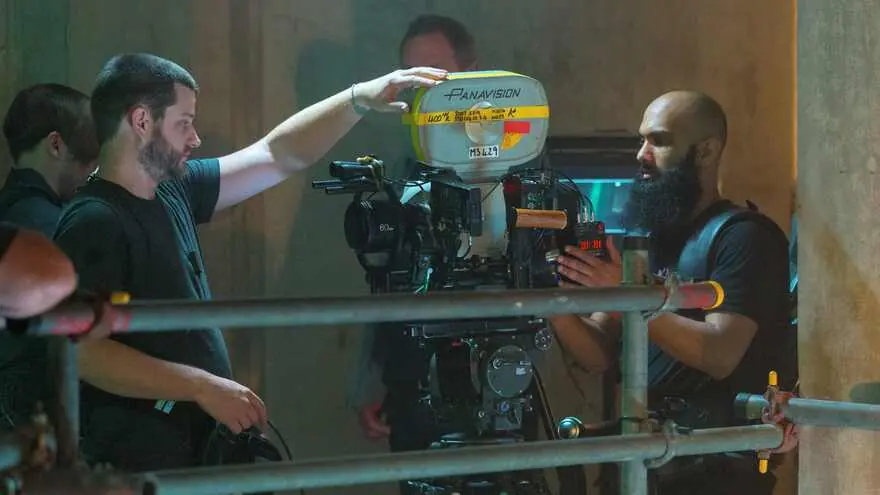
You arrive. Trucks open, breakfast on, departments prepping. Camera builds, sparks pull cable, the art department dresses the set.
07:00
Blocking rehearsal
Director, cast, DoP, 1st AD and the relevant heads of department only. You stand well back and watch, because what happens here decides the next three hours.
07:45
Lighting and marking
Stand-ins take the cast’s positions, marks go down, lighting rigs the scene and grip builds whatever the camera moves on. The longest block of the morning.
08:00
First shot
A good unit aims to be turning over within ninety minutes of call. The first shot sets the tone for whether the day is winnable.
09:30
Coverage
The same scene from other positions: the reverse, the singles, the inserts. Each one is a relight and a reset, and each takes longer than an outsider expects.
Morning
Lunch
Called roughly six hours after unit call, and contractual rather than optional. Going through it costs the production a penalty payment.
13:00
The afternoon
Faster, usually. The schedule is now visibly winnable or visibly not, and the 1st AD starts choosing what to lose.
14:00
The Abby Singer, then the Martini
The second-to-last shot and the last shot of the day. When you hear the first one, start thinking about how your department gets packed.
18:00
Wrap and turnaround
Kit packed, trucks loaded, and the clock starts on the minimum rest period before tomorrow’s call. That period is why a late wrap moves the whole of the next day.
19:00
Six-day weeks, night shoots, weather cover and split days all exist. The one constant is that the day ends when the 1st AD says it ends.
The two things people get wrong
Silence is a recording condition. A trainee is a working grade.
Sound
Why it goes quiet when it goes quiet
Dialogue is recorded live, on the day, by a microphone a few feet above the actors’ heads. It catches a zip, a footstep on gravel, a radio squelch, a fridge compressor, your whispered question — and anything it catches is either lived with for the life of the film or replaced later at cost.
So when a lock-up is called the stillness is doing technical work, and that is why sound can stop a take everybody else thought was perfect. Put your phone off rather than on silent: a silent phone still interferes with radio microphones.
Trainee
What a trainee does, which is not making tea
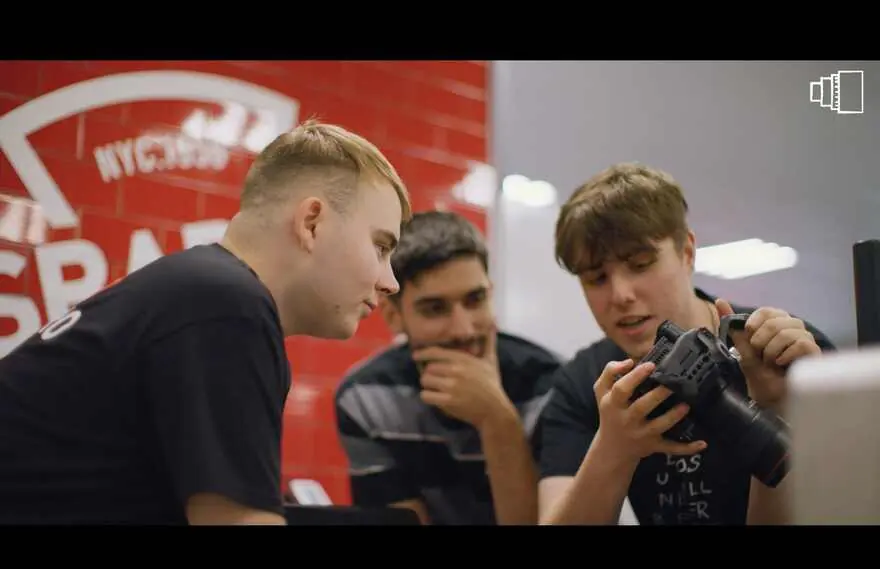
A trainee in a technical department is a working member of it. Batteries charged, rotated and distributed. Media carried between camera and the data wrangler, which means you are holding the only copy of the day’s work. Marks laid and re-laid. Kit built, dried, cased and inventoried. Radio answered first time.
The whole craft is three words: anticipate one step ahead. Have the thing in your hand before it is asked for and you will be hired again.
Next
The day makes sense once you know who everybody is.
Two things follow from this page. One is the department map — every craft, its size and its reporting line. The other is the vocabulary, which is a gate and a cheap one to open.