
Case study · 2026
A two-day short: the gimbal a short film budget cannot usually reach.
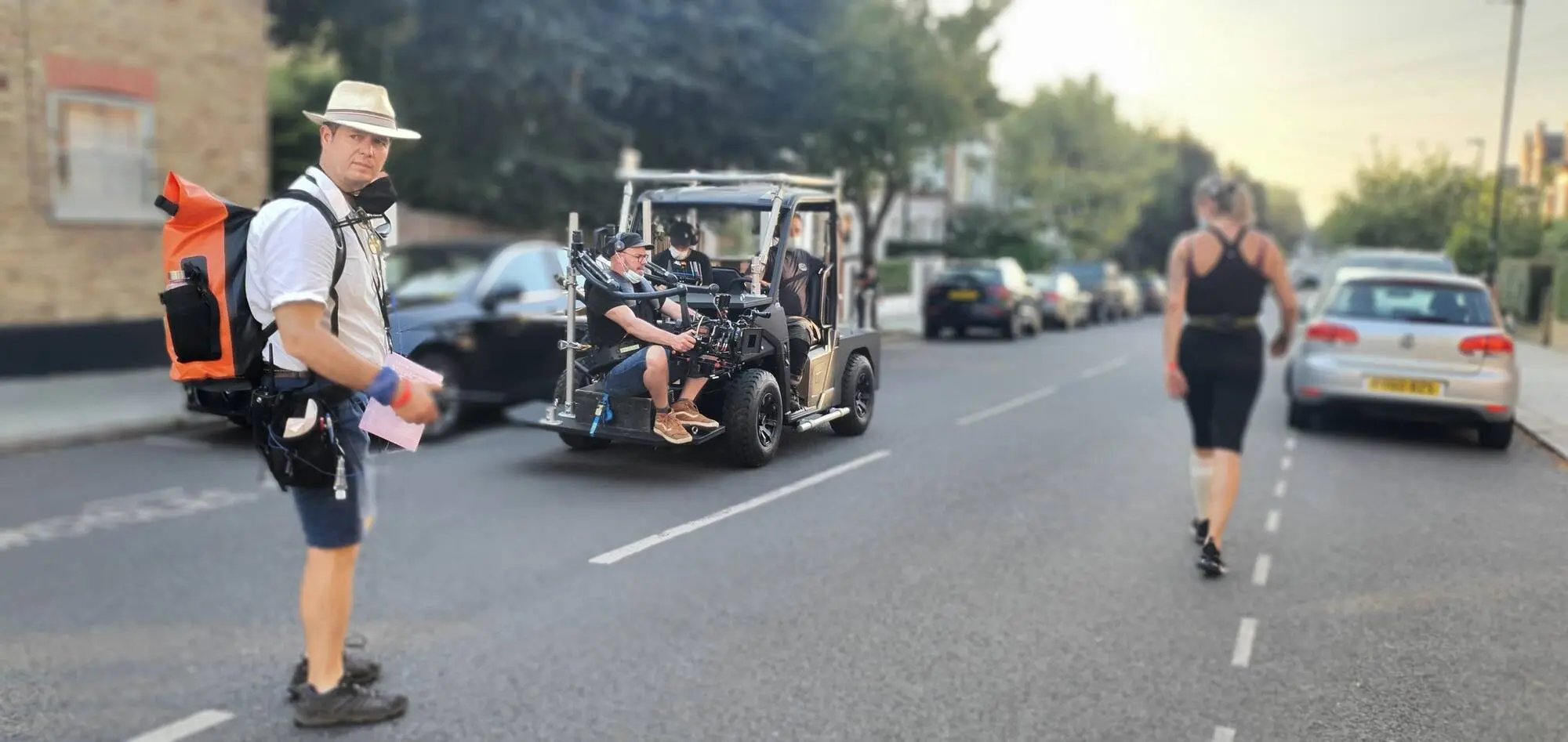
A stunt performer moving into directing needed camera movement that is normally out of reach at short film scale. Futures in Film supplied the Helix stabilisation system and gimbal, crewed, across a two-day shoot. The production paid for it, and trainees worked the job.
Same four headings as every case study here.
The work
Brief, constraint, what was done, what changed.
The brief
A short film, two days, directed by a stunt performer making the move behind the camera. The work called for stabilised movement and the crew to run it, on a schedule with no contingency in it.
The constraint
Equipment of this kind is where short films stop. It is not only the hire. It is that the system needs someone who knows it, and a two-day schedule cannot absorb a learning curve. So shorts shoot flatter than they were written, and the people who most need a first credit never get near the kit.
What was done
Futures in Film supplied the Helix system and gimbal with technical support on the floor, and put trainees on the shoot working alongside the crew rather than watching it. Two days, both days, on the call sheet.
What changed
The director got the movement the film was written for. The trainees came off with two days of real credits on a professional short and hands on a system most people only read about. The production paid for the support, and that money went to Futures in Film CIC.
Why a short film
Small productions are where first credits actually happen.
A feature can rarely carry someone who has never done the job. A two-day short can, and it is where most first credits are earned.
It is also where the gap in access is widest, which is why we treat shorts as delivery and not as favours.