
5 of 10
You cannot keep recording. That is the whole method.
Digital allowed a way of working that nobody chose deliberately: roll early, roll long, find it in the take, sort it out later. It is not wrong and it has made good films. But it is a method, and film does not support it.
So the thinking moves. What would have been found during the take has to be found before it.
What moves to before the roll
Four conversations that stop happening on the take.
Blocking
Where people go, and where the camera goes with them, settled with the actors and the crew watching rather than discovered while stock runs. The focus puller needs marks, and marks come from rehearsal.
The performance question
The director’s note lands before the roll, not between takes four and nine. Most actors prefer this. It is closer to how theatre works and it treats the take as the event rather than the search.
The technical rehearsal
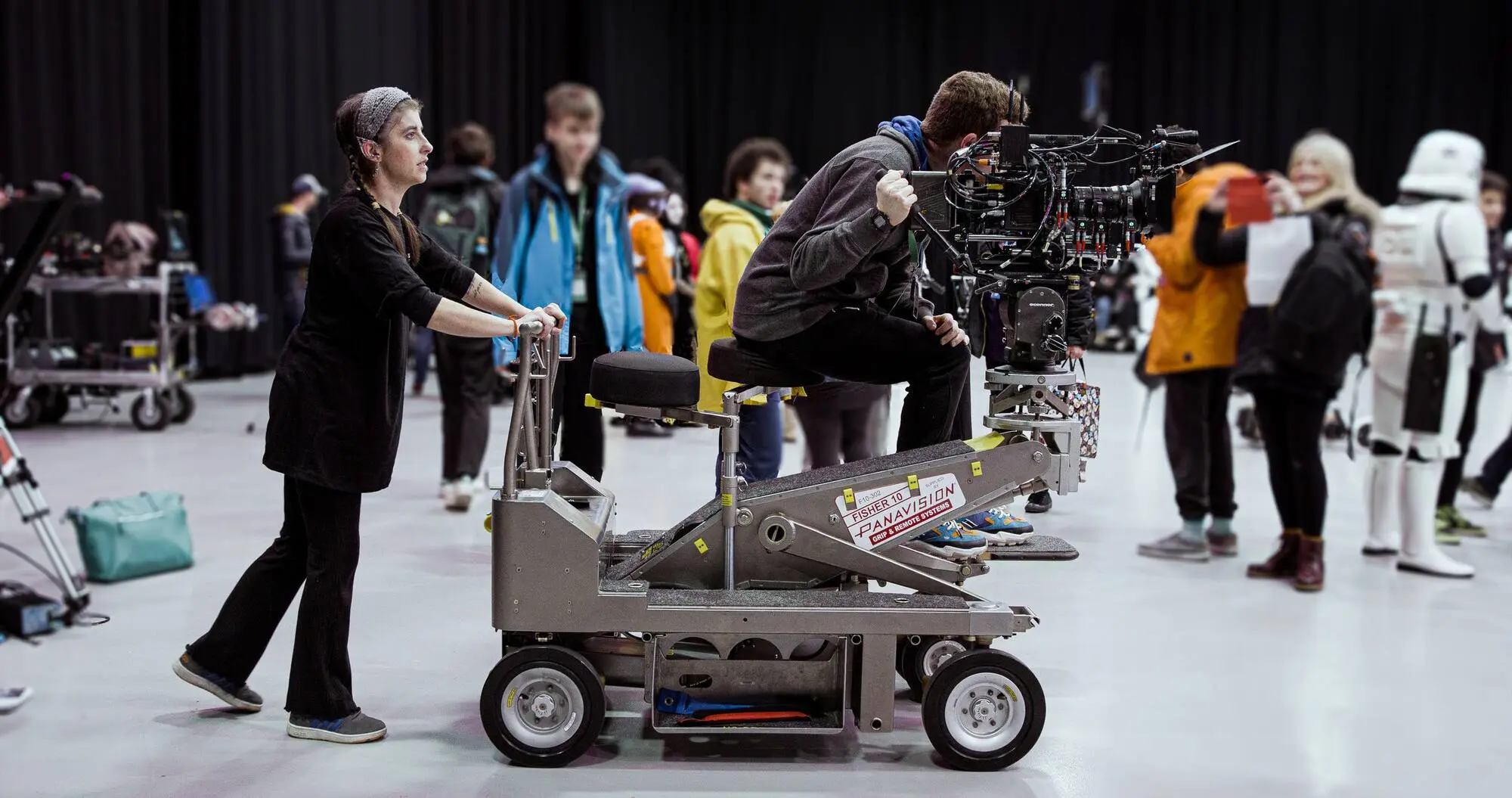
The move, at speed, with the crew who will do it — grips, focus, lighting cues — until it works twice. A dolly move that has been rehearsed twice costs nothing. The same move discovered on take six costs three hundred feet.
The decision to go again
On film, “going again” is a spend. Saying out loud why you are going again — a better performance, a technical fault, protection — makes the set honest and keeps the ratio where development said it would be.
The part people get wrong
Rehearsal is not about saving money.
It reads like an economy and it is not. A rehearsed set is a calmer set, and a calmer set gets better performances and fewer injuries. The stock discipline is what forces the rehearsal, but the rehearsal is worth having on its own terms.
This is the single biggest thing a crew brings back to their digital work afterwards, and it is why we teach film to people who will mostly shoot digital.