

Test days
A full shooting day with nothing riding on it.
Before a production commits to a format, a lens set, a rig or a workflow, somebody has to put it through a real day. Before a manufacturer ships, somebody has to find what fails in a working crew’s hands. Before a new entrant is trusted with a magazine, somebody has to let them load one.
It is the same day. We run it on the Pinewood lot, scheduled and crewed like a unit, and any surplus goes back into the work.
Who books one
Four reasons a day gets booked.
The day is built around the question you arrive with. The rest of the room is the same.
01
Productions and heads of department
Answer the questions prep cannot answer on paper — before they cost you a shooting day.
02
Crew, at every grade
Hands on current equipment. Mid-level crew moving up a grade, new entrants meeting the kit for the first time.
03
Manufacturers and rental houses
Your product in front of people who have not yet learned to work around its faults, and people who have.
04
Research and development
A controlled environment, repeat runs and an instrumented record — for work that is not a product yet.
For productions
The day that stops an argument in week three of the shoot.
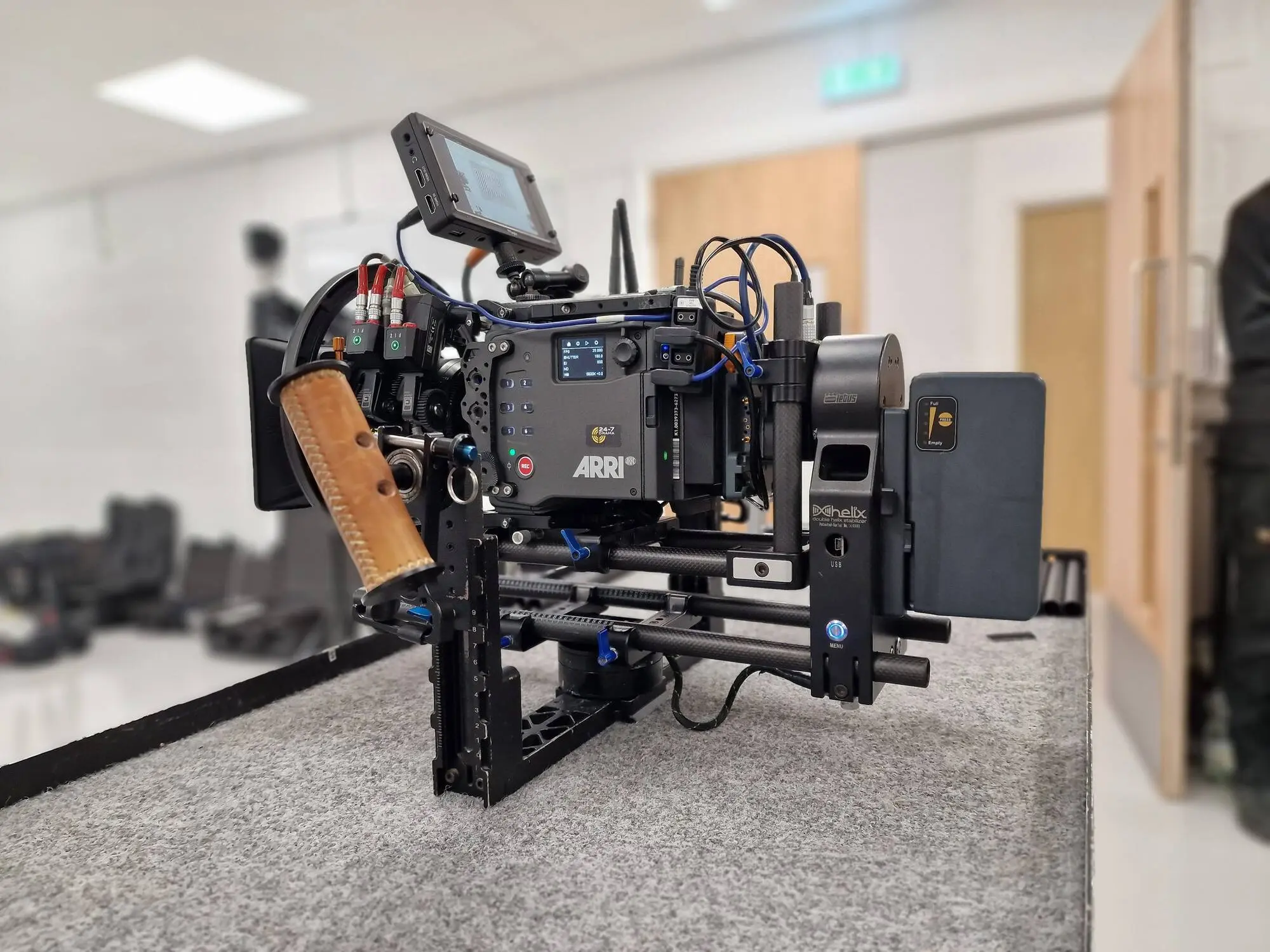
A camera test is the only setting in which the whole chain exists at once — body, glass, filtration, lighting, colour pipeline, make-up, costume and a lit face — without a schedule bearing down on it. Most productions know they need one. Fewer can find a room, a package and a crew on the dates prep allows.
Optics, chosen rather than assumed
Focal lengths compared side by side and selected by serial number, across the stops you will actually shoot. Resolution across the frame, focus breathing, close focus, veiling glare and direct flare, fall-off, bokeh and how the set renders skin. Zooms run through their range for tracking error. Distance marks checked on the projector and intermediate marks added.
One show LUT, built and viewed at scale
Look development with your DIT and your colourist, judged on calibrated monitoring in log and in Rec.709, with false colour and waveform — then viewed large. A look that holds on a truck monitor and falls apart in the theatre is a look you find out about now.
Faces, fabric and the things that moiré
Make-up, hair, costume and production design in the room with the camera. Skin tones across your cast. Weaves, patterns and finishes against the format. Prosthetics under the lighting ratio the director has agreed, not under a bench light.
Methodology, before it costs you days
Techvis and rig testing: a move, a mount, a car process, a high-speed pass, a virtual production set-up. What is achievable in camera, what needs a plate, what the crane will and will not reach. The answer is a number of shooting days either way.
Screen tests and rehearsal on the format
Cast on camera in the format, on the lenses, in the look. Directors get performance; producers get an image they can sign off; the camera department gets a rehearsal of its own workflow.
Shooting film, if that is the decision
Magazines, loading, stock handling and the lab loop, closed properly. Negative report sheets written as they would be written on a unit, and rushes back. The decision to shoot film should be made after somebody has run the loop, not before.
For crew
The most valuable day in the camera department, and the one nobody can get on.
A test day sits inside a funded production’s prep. That is precisely why it is closed: the schedule is paid for, the negative is paid for, and there is no margin to let an untrained person touch either. So the one environment where the whole chain is laid out and explained is the one environment a new entrant never sees.
We run ours with two populations in the room deliberately, and that is not charity on either side. Working crew know what good feels like and cannot always say why. People meeting a piece of equipment for the first time fail to get the shot and can tell you exactly where. Both are useful. Both get written up.
Entry level
Hands on the kit, under supervision, with somebody explaining what is being decided and why. Loading, building, marking up, running the cart.
Mid level
The grade above yours, on a day where getting it wrong costs nothing. Focus at stops you would not risk on a unit, a rig you have never been given, a workflow you have only read about.
Heads of department
Technology you are being asked to commit to, in your hands before you commit. Test days are where HODs form the opinions productions then pay for.
Crossing over
Crew moving between departments, formats or disciplines. The chain is visible on a test day in a way it never is at working pace.
What a day can put under test
By discipline.
Camera
Cameras, optics and monitoring
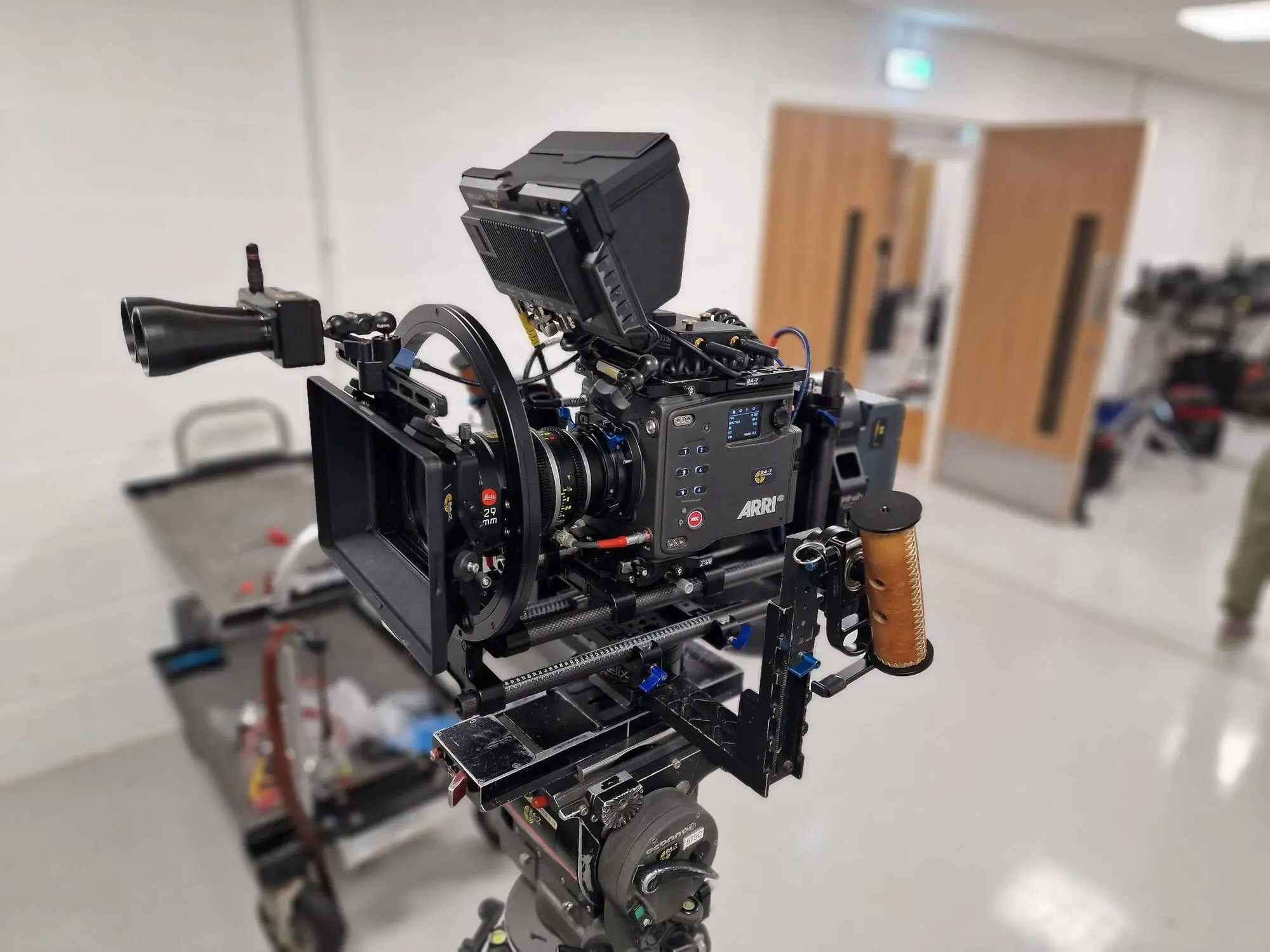
Bodies, glass, filtration, media and monitoring, digital and film.
Colour
Colour pipeline
Look development, the show LUT, on-set grading and the handover into post.
Grip
Stabilisation, heads and rigging
Gimbals, remote heads, dollies, cranes and mounts, run by grips.
Light
Lighting and power
Fixtures, control, colour rendition and distribution, on a lit set rather than a stand in a car park.
VP
Virtual production
LED volumes, camera tracking and in-camera VFX — frustum, pixel pitch, moiré and genlock, tested before a stage is booked.
Wear
Wearable support and load
Exoskeletons and support systems, measured against fatigue across a working day, not a ten-minute demonstration.
AI
AI tools and workflows
Editorial, sound, art department and production office tools, tested department by department.
How it runs
Six stages, agreed in writing before anything arrives.
01
Scope
You say what you need to know and what a useful answer looks like. It goes in writing, with the confidentiality position, before a single case is opened.
02
Bench
Build, teardown, repeat runs and controlled comparison in the test room. Instrumented where instrumenting it is possible.
03
Build
The equipment assembled as a working unit would assemble it, by the department that would own it, with the accessories and cabling that decide whether a thing is usable.
04
Shoot
Onto a working unit for a shooting day — call sheet, grades, schedule, working pace. Nothing is learned from a bench that will not be contradicted by a floor.
05
Review
Material viewed properly. Graded and seen at scale where the question is an image question, on a screening theatre on the lot rather than on a laptop.
06
Report
Observed use, not a questionnaire. Operator notes, a structured comparison and what each population actually did, written up and delivered under the terms agreed at scope.
Two operators working the rig together outdoors
What we bring
The room, the technical support and the crew.
You can arrive with nothing but the question. We hold the rooms on the lot, supply the technical equipment support the day needs across camera, lighting, grip, sound and data, and crew it with people who are on units now.
Where the day needs something we do not hold, we bring it through the supply chain and quote it on the same piece of paper.
Stated up front
What the day is not.
A test day is paid work, and any surplus is locked to community benefit. It buys a training place. It does not buy a finding.
- We do not endorse products. A report may not say what you hoped it would say
- We do not describe any organisation as a partner unless the wording has been agreed in writing
- We do not publish anything about a product, a production or a workflow without written agreement
- We do not put an unsupervised trainee anywhere near a decision that has money on it
Next
Tell us what you need to know.
A production in prep, a product that is not finished, a technique nobody has committed to yet, or a department that needs a day on the kit. Bring the dates.