

Our work
Where people start, and where they go.
This is what the test days and the commercial work pay for. The pathway is deliberately flexible, because participants do not all begin from the same place. Seven stages, each with the community benefit it carries.
The stages
Awareness, engagement, training, simulation, exposure, support, progression.
Awareness
Public events, community outreach, online discovery, school and college engagement, faith and community networks. Participants begin to see the industry as possible and relevant.
01
Engagement
Registration, conversation, interest forms, cohort identification and initial guidance. Barriers, interests and readiness are identified.
02
Training
Workshops, seminars, technical sessions, mentoring and practical demonstrations. Knowledge, technical familiarity and confidence begin to develop.
03
Simulation
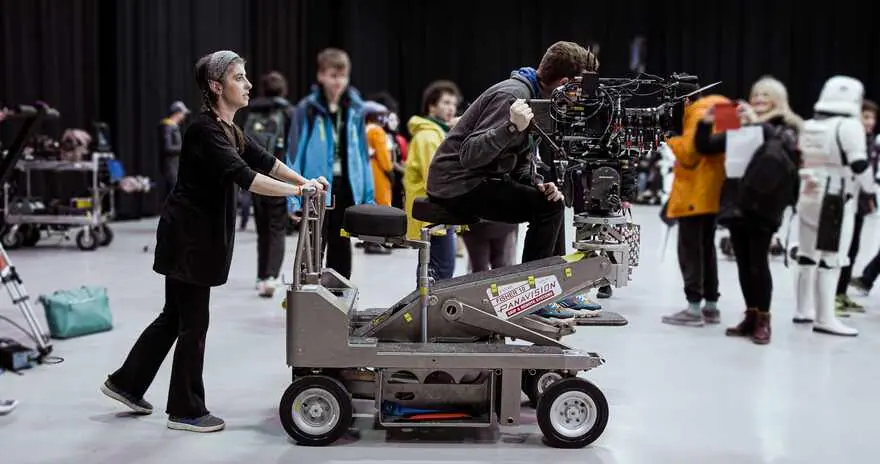
Role-based production environments with practical tasks, call sheets, equipment, timing and pressure. Participants experience production expectations safely.
04
Exposure
Studio, guild, rental-house, manufacturer, practitioner and event-facing contexts. Participants understand professional standards and network culture.
05
Support
Guidance, feedback, pastoral awareness, inclusion adjustments and continued contact. Confidence, resilience and belonging are strengthened.
06
Progression
Further training, shadowing, placements, CV evidence, credits, mentoring or continued development. A pathway becomes visible and more realistic.
07
The delivery pathway as set out in the filed Social Impact Audit and Community Benefit Report.
At every stage
What runs through all of it.
Inclusive representation
Cultural safety, faith-literate practice and access, at every stage.
Technical innovation
The test room serves the first stage and the last one equally.